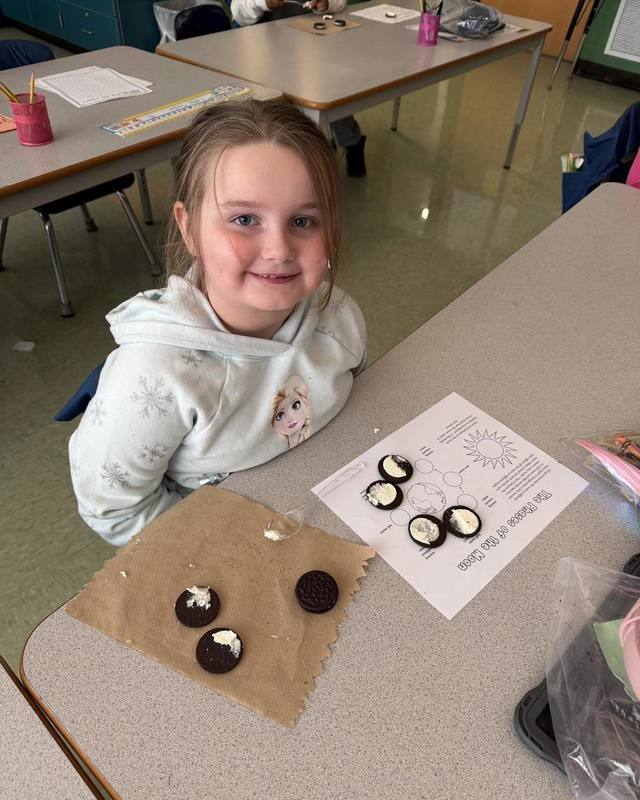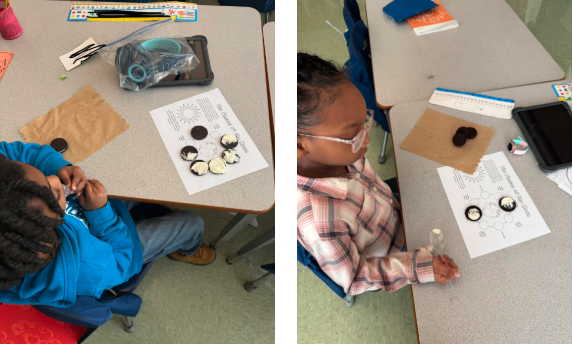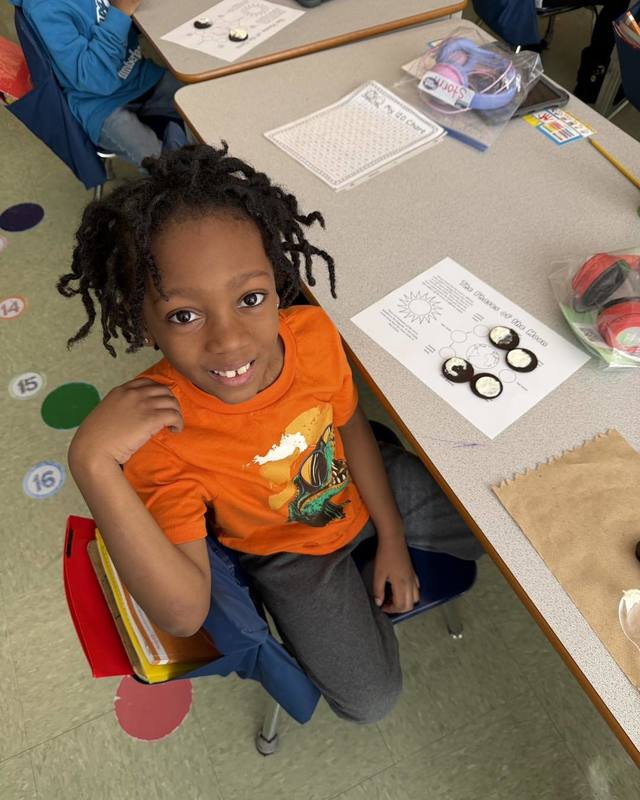
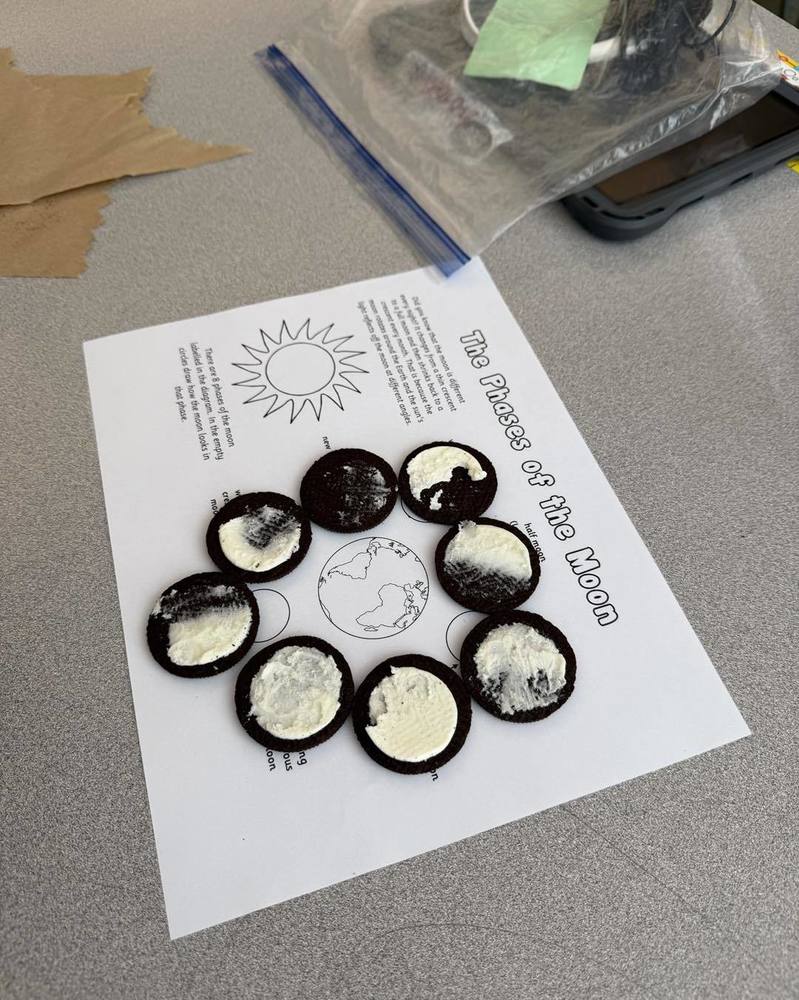
Students in Mrs. Hickman’s First Grade class at Arbor had a tasty way to explore the phases of the moon in a hands-on and creative way. As part of the CKLA knowledge unit on astronomy, students used Oreo cookies to model the different phases of the moon, turning a familiar treat in to an important science lesson.
During the lesson, students learned how the moon changes shape throughout the month as it orbits Earth. By carefully removing portions of the cream filling, they recreated phases such as the new moon, half moon, and full moon. The activity helped students visualize how sunlight reflects off the moon and why it appears to change in the night sky.
Astronomy is an important part of first grade science because it introduces students to patterns in nature and encourages observation and inquiry. Young learners begin to understand that the sky follows predictable cycles. They practice asking questions, making predictions, and connecting what they see in the classroom to what they observe at home. These early science experiences help build foundational skills in critical thinking and curiosity.
In Euclid, astronomy holds a special place in our hearts. Our district is home to a planetarium that allows students to experience space science in an immersive way as they grow through the grade levels. We are also proud to be the home community of recently retired astronaut Suni Williams, whose career serves as an inspiring reminder of what is possible when students pursue science, exploration, and lifelong learning.
By connecting classroom instruction to hands-on activities, Mrs. Hickman’s students were able to explore complex scientific concepts in a way that was age appropriate and memorable. Using Oreos to model the phases of the moon made the lesson engaging while reinforcing key academic standards in Earth and space science.
Moments like this show how science learning can be both joyful and meaningful. In Euclid Schools, even a simple cookie can become a tool for discovery, helping young Panthers look up at the night sky with greater understanding and wonder.